- English
- Español
- Português
- русский
- Français
- 日本語
- Deutsch
- tiếng Việt
- Italiano
- Nederlands
- ภาษาไทย
- Polski
- 한국어
- Svenska
- magyar
- Malay
- বাংলা ভাষার
- Dansk
- Suomi
- हिन्दी
- Pilipino
- Türkçe
- Gaeilge
- العربية
- Indonesia
- Norsk
- تمل
- český
- ελληνικά
- український
- Javanese
- فارسی
- தமிழ்
- తెలుగు
- नेपाली
- Burmese
- български
- ລາວ
- Latine
- Қазақша
- Euskal
- Azərbaycan
- Slovenský jazyk
- Македонски
- Lietuvos
- Eesti Keel
- Română
- Slovenski
- मराठी
- Srpski језик

How Do Dimmable LED Strip Lights Adapt to Residential and Commercial Lighting Needs?
Article Abstract
Dimmable LED Strip Lights have become a widely adopted lighting solution across residential, commercial, and architectural projects due to their adaptability, controllability, and efficiency. This article provides a comprehensive technical and practical analysis of Dimmable LED Strip Lights, focusing on how they function, how they are specified, and how they are applied in real-world environments. The content examines key product parameters, installation considerations, control compatibility, and long-term development directions, while addressing common technical questions through a structured question-and-answer format. The objective is to support informed decision-making for lighting designers, contractors, and procurement professionals.
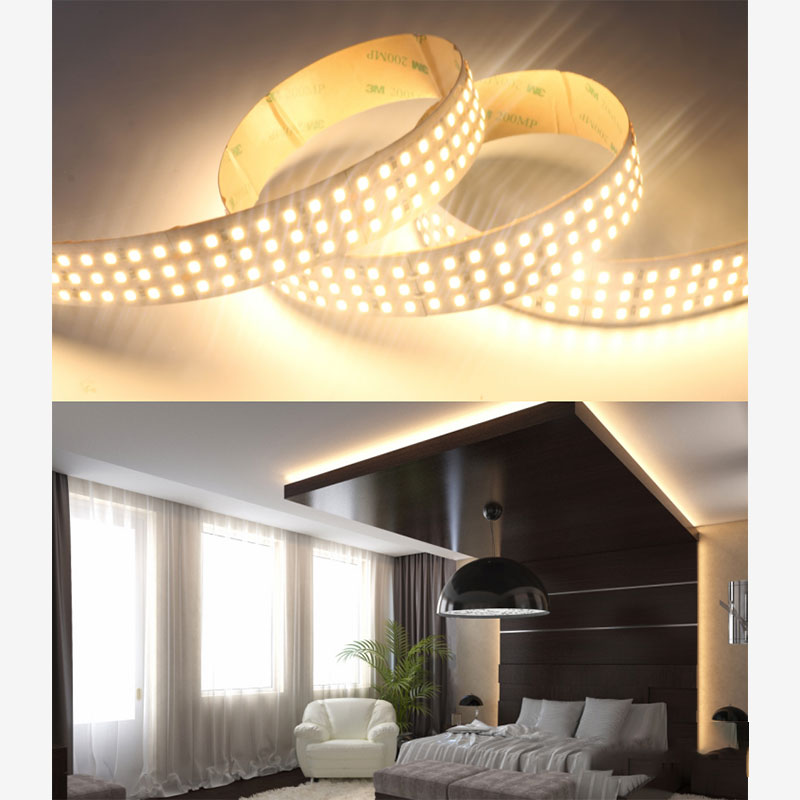
Table of Contents
- How Do Dimmable LED Strip Lights Work in Modern Lighting Systems?
- How Should Dimmable LED Strip Lights Be Specified and Installed?
- How Do Dimmable LED Strip Lights Perform Across Different Applications?
- How Are Dimmable LED Strip Lights Expected to Evolve?
Outline
- Technical overview and operating principles
- Product parameters and configuration standards
- Installation, control, and compatibility considerations
- Application scenarios and performance expectations
- Common technical questions and detailed explanations
- Industry outlook and development direction
How Do Dimmable LED Strip Lights Work in Modern Lighting Systems?
Dimmable LED Strip Lights are linear lighting products composed of surface-mounted light-emitting diodes arranged on a flexible printed circuit board. These strips are designed to emit consistent illumination while allowing precise adjustment of light output through compatible dimming methods. The fundamental operating principle relies on regulating electrical current supplied to the LEDs, thereby controlling luminous intensity without altering color stability or efficiency when properly configured.
In modern lighting systems, dimming is typically achieved through one of several methods, including pulse-width modulation (PWM), constant current reduction (CCR), or digital signal-based protocols. PWM dimming is commonly used in LED strip applications because it preserves color temperature while offering smooth and flicker-controlled performance. When integrated with appropriate drivers and controllers, Dimmable LED Strip Lights can be synchronized with smart lighting systems, architectural control panels, or standalone dimmers.
From a system perspective, the strip light itself is only one component. Stable performance depends on the correct alignment of strip voltage, driver output, dimming signal type, and load capacity. Any mismatch among these elements can result in limited dimming range, visible flicker, or premature component degradation.
Core Product Parameters
The technical specification of Dimmable LED Strip Lights determines their suitability for specific applications. The following table summarizes common parameters used in professional lighting projects.
| Parameter | Typical Range | Technical Significance |
|---|---|---|
| Input Voltage | 12V / 24V DC | Affects installation length and voltage drop control |
| Power Consumption | 4.8W–20W per meter | Determines brightness level and driver sizing |
| Luminous Efficacy | 90–130 lm/W | Indicates energy efficiency |
| Color Temperature | 2700K–6500K | Defines visual warmth or coolness |
| Dimming Compatibility | PWM, 0–10V, DALI | Ensures integration with control systems |
| Ingress Protection | IP20–IP68 | Determines suitability for indoor or outdoor use |
How Should Dimmable LED Strip Lights Be Specified and Installed?
Correct specification and installation are critical to achieving reliable dimming performance. Selection begins with defining the lighting objective, including required illuminance, uniformity, and control precision. Dimmable LED Strip Lights must then be matched with drivers that support the chosen dimming method and provide sufficient power headroom.
Voltage drop is a key technical consideration, particularly for longer runs. Lower-voltage systems require careful segmentation and parallel wiring to maintain consistent brightness. Aluminum profiles are frequently used to support heat dissipation, which directly influences lumen maintenance and operational lifespan.
Installation environments also influence specification. For enclosed spaces, thermal management becomes more critical, while moisture-exposed areas require higher ingress protection ratings. Proper connector selection and soldering practices further ensure stable electrical contact and long-term reliability.
Common Questions and Detailed Answers
Q: How does dimming affect the lifespan of LED strip lights?
A: When implemented correctly, dimming can extend operational lifespan by reducing thermal stress. Lower average current levels decrease junction temperature, which supports long-term lumen maintenance and component stability.
Q: How can flicker be avoided when dimming LED strip lights?
A: Flicker is typically caused by incompatible drivers or low-quality dimming signals. Using high-frequency PWM drivers and ensuring compatibility between the controller and power supply minimizes visible and invisible flicker.
Q: How should drivers be sized for dimmable LED strip installations?
A: Drivers should be selected with at least 20–30% additional capacity beyond the calculated load. This margin ensures stable output, accommodates voltage fluctuations, and supports smooth dimming across the full range.
How Do Dimmable LED Strip Lights Perform Across Different Applications?
Dimmable LED Strip Lights are used in a wide range of environments, from residential accent lighting to large-scale commercial and hospitality projects. In residential settings, they are commonly applied in kitchens, living areas, and bedrooms where adjustable ambiance is required. Smooth dimming allows transitions between task-oriented illumination and low-level ambient lighting.
In commercial applications, such as retail or office spaces, dimmable strip lighting supports visual comfort and energy management strategies. Integration with daylight sensors and scheduling systems allows illumination levels to respond dynamically to occupancy and natural light availability.
Architectural and hospitality projects often prioritize uniformity and color consistency. High-quality Dimmable LED Strip Lights with tight binning tolerances ensure consistent appearance across long runs and multiple zones. Advanced control systems enable scene setting and gradual transitions that align with spatial design objectives.
How Are Dimmable LED Strip Lights Expected to Evolve?
The development of Dimmable LED Strip Lights is closely aligned with advancements in control technology and system integration. Increased adoption of digital protocols allows more precise control, remote monitoring, and integration with building management systems. Improvements in LED chip efficiency and thermal design continue to support higher output within compact form factors.
Another notable direction is the refinement of human-centric lighting solutions. Tunable white and dynamic dimming capabilities are increasingly specified in projects that prioritize occupant comfort and productivity. These developments rely on highly stable dimming performance and accurate color control across the entire operating range.
From a sustainability perspective, extended product lifecycles and reduced energy consumption remain central considerations. Dimmable LED Strip Lights that maintain performance over time contribute to lower maintenance requirements and reduced total cost of ownership.
Conclusion and Brand Reference
Dimmable LED Strip Lights represent a versatile and technically mature lighting solution capable of meeting diverse project requirements when correctly specified and installed. Through careful alignment of product parameters, control methods, and application needs, these systems deliver adaptable illumination across residential, commercial, and architectural environments.
As a professional lighting manufacturer, Kons Lighting focuses on delivering stable, well-engineered Dimmable LED Strip Lights that align with international project standards and evolving market requirements. For tailored product guidance, technical documentation, or project consultation, interested parties are encouraged to contact the Kons Lighting team for further information.